This blog will discuss the current issues in creativity by the graduate students at the International Center for Studies in Creativity at Buffalo State. www.buffalostate.edu/creativity The views expressed herein are those of the graduate students and do not necessarily represent the views of the International Center for Studies in Creativity or of any other Buffalo State College body.
Thursday, April 8, 2010
Book Review: Change by Design
Book Review: Mindset
Book Review: A fine line: How Design Strategies are Shaping the Future of Business
“I understood very early on that businesses need creativity like humans need oxygen, and I was able to convince my clients that they needed to ‘breathe’ in order to flourish” (Esslinger, 2009, p. xii).
By all accounts, frog design, inc. has done everything right. In his book Fine Line: How Design Strategies are Shaping the Future of Business, frog’s founder, Hartmut Esslinger, takes readers on a personal and professional journey through forty years of cutting-edge design thinking, creative strategies, and innovative problem-solving. Remaining down to earth and surprisingly un-pompous, Esslinger’s narrative is straightforward and informative from both a design and a business perspective, and offers invaluable insight to anyone looking for an insider view of the industry and how design and business principles can be combined for greater force within it.
While still a student, Esslinger had an experience – a rejection in a design competition – that served as an epiphany. Dismissing the current world of design as a stiff and limiting hierarchy, he founded his first design firm, esslinger design (Esslinger purposely did not capitalize the name), in 1969 with one simple vision: that design could be relevant to business and industry and be redefined as a strategic profession. He formulated a six-step, simple but ambitious plan that included working for the client rather than for himself and always looking for the best people when it came to not just business partners and employees, but in clients, too. Providing the best for the best was, in Esslinger’s plan, the way to success. And it worked.
Founding frog (again, no capitalization, as a purposeful rebellion against grammatical rules) shortly thereafter, Esslinger formed a business relationship with Steve Jobs of Apple Computer and created the “Snow White language” that would serve as the basis for Apple’s revolution and a precursor for Apple’s present-day colossal market presence.
Leadership, to Esslinger, was the hinge upon which a company’s success could swing. Principles and vision and strategy were all part of success, but without effective leadership, nothing else could work. Having witnessed the implosion of Apple after Jobs’ dismissal in 1985, he attributed the ensuing dysfunction on lack of foresight and poor leadership. Leaders, Esslinger said, are obligated to make all the right decisions – for their company, its employees, its shareholders, their families, and the local economy; it’s what Tim Brown (2008) of IDEO calls “the people first approach” (87). The most important factors in effective leadership are the desire to explore the unknown, to be willing to take risks, and above all – flexibility. Creative strategy is flexible. So must be its leaders. Frog’s motto, in fact, is Change Is Fun (Esslinger, 2009).
In 2008, Amabile and Khair wrote an article for the Harvard Business Review, in which Amy Edmunson, a professor at Harvard, stressed management’s role in creating a psychologically safe environment in order to foster trust and creativity. Esslinger obviously built frog on this principle, yet was focused and confident, wielding what Jack and Suzy Welch (2007) referred to "The Velvet Hammer” (116) – the firm but gentle approach to managing creative personalities.
Esslinger moves through the various schools of thought in the design world, pointing out the importance of choosing the right creative partner for the job. His strategy was nothing new; domain specificity and interdomain creativity differences have been studied by researchers and scholars like Howard Gardner for years. Donald MacKinnon’s seminal research into the ego, personalities, and self-images of architects in the 1960’s laid solid ground for such theory. (Runco, 2007). Esslinger recognized this and worked it into his success. Putting, for example, a classic designer like Dieter Rams on a project more suited for an artistic designer such as Ross Lovegrove was, to Esslinger, counterintuitive and an irresponsible way to run things. Frog’s strategy, nonetheless, is still one of holistic design, of “strategic designers who are fluent in convergent technologies, social and ecological needs, and business”(p. 53). Like Pixar’s Ed Catmull (2008) noted about his company’s peer culture and creative process, “everyone is fully invested in helping everyone else turn out the best work” (p.69).
References
Amabile, T. and Khaire, M. (2008, October). Creativity and the role of the leader. Harvard Business Review. 101-109.
Brown, T. (2008, June). Design thinking. Harvard Business Review. 84-92
Catmull, E. (2008, September). How Pixar fosters collective creativity. Harvard Business Review. 65-72.
Runco, M. (2007). Creativity theories and themes: research, development, and practice. Burlington, MA: Elsevier.
Welch, J. and Welch, S. (2007, September 27) Wielding the velvet hammer . Business Week. 4051. 116. Retrieved from http://proxy.buffalostate.edu:2076/ehost/detail?vid=1&hid=103&sid=1de8d40e-39a5-4eaa-8922-dfda0734d155%40sessionmgr111&bdata=JnNpdGU9ZWhvc3QtbGl2ZQ%3d%3d#db=voh&AN=26607500
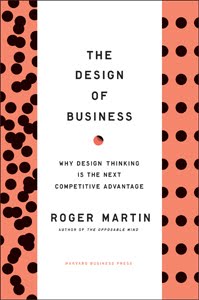
Book Review: The Design Of Business
“…Harnesses two forms of logic- deductive reasoning and inductive reasoning….the goal of this thinking is mastery through rigorous, continuously repeated analytical processes. Judgment, bias, and variation are the enemies.” (Martin, pg.5)
Book Review: Creative Recovery: A Complete Addiction Treatment Program That Uses Your Natural Creativity
While Maisel and Raeburn directed Creative Recovery towards a specific population, that being creative people who are suffering from addiction, that is not to say that the definitions and explanations provided in this volume couldn’t be valuable to readers of varying perspectives. One such perspective is the reader who is looking to understand the illness that is addiction. For that reader, Maisel and Raeburn outline several aspects of addiction including types of addictions, the addiction spectrum, and the types of risk factors that contribute to addictive behavior. Enter creativity. The authors explain how being a creative person is in itself a risk factor for addiction and how the creative person is more susceptible to addiction due to some of the characteristics determined to be typical of the creative personality. Rather than diving into the immense body of research that has been done about the creative personality, the authors cite one trait in particular that they assert contributes to addiction the most: individuality. According to the authors, the more than 75 traits that are related to the creative personality all flow from individuality. It is traits like these that come together to make the creative person more prone to addiction as they attempt to express their individuality. In his studies of personality, Gary Davis (2004) categorized over thirty personality traits that can be attributed to or fall under the heading of “independent.” One of these traits is “individualistic”, and it is not a far stretch to see how the others listed in the category can contribute to one’s sense of individuality, such as outspoken, uninhibited, and strong willed. Other traits that make the creative person vulnerable to addiction, as described by the authors and supported by Runco (2007) include an openness to experience as well as an attitude of non-conformity. A person who is open to a wide variety of experiences may also suffer from issues of self-control which have also been linked to addictive behaviors (Miller, 2007). Clearly, the assertions that the authors make to support the creative person as more prone to addiction than their non-creative counterpart are rooted in several personality studies and hefty personality research. In summary, the authors successfully illustrate that there are many overlaps between the creative personality and the addictive personality.
After giving a background on addiction - its meaning, its warning signs, and its risk-factors - the authors dedicate the remainder of the book to outlining an addiction recovery program geared towards the risks faced particularly by the creative person. It is in these steps that the authors forfeit some of their readers by defining creativity rather narrowly. In the beginning of the book, Maisel and Raeburn (2008) describe what they believe to be the creative person and essentially define creativity. In their opinion, the creative person is:
a sensitive, intelligent, thoughtful, ethically responsible person with a deep desire to actualize [their] potential; someone who responds to beauty and is interested in beauty; a person with a strong sense of individuality who nevertheless needs to make more-than-just-me connections; someone who would love to live an artful, art-filled, and possibly art-committed life that feels rich and authentic (p. 3).
While this definition begins broad and seems to include creative endeavors of all kinds by simply defining the creative person, it ends by restricting creativity as pertaining to arts and aesthetics. What follows in the remainder of the book is an outline of a recovery program that is based on this definition and tailored to the type of creative person defined above. At the conclusion of each chapter the authors provide exercises designed for the various types of creative people, intended to reinforce the particular aspect of the recovery program they described in that chapter. While they do indeed make use of the reader’s creativity, the exercises, which are directed toward dancers, musicians, writers, visual artists, and scientists, limit the ways in which people in other creative fields could benefit from their recovery program. The one way in which the authors compensate for this is by offering one last set of exercises, vaguely directed at “the dreamer.” This works as a “catch-all” for those creative people that do not fit into the categories listed above.
The final section of this book deals with maintaining sobriety and overcoming the challenges that stem from the need to create. This section, which has the benefit of being proactive, discretely calls upon some rather robust principles of creativity. One of these principles in disguise is the need to live an authentic life. The authors describe an authentic life as one which is ethical, passionate and creative, and one in which we strive for personal integrity. This description is very reminiscent of the self-actualized life described by Maslow (1968). Another principle stressed by the authors comes in the form of a caveat. In order to avoid relapse, the authors recommend a careful, reflective balance of our creative personality, the creative work itself, and the world in which we find ourselves creating. It is just as important that we pay attention to the ways we work through the creative process and to those steps that might be the most troublesome to us and therefore threaten sobriety. It is easy to see how closely these elements resemble the model of creativity presented by Rhodes (1987) and how equal attention to each aspect - person, product, process, and press - is necessary in order to live a sober life that is free of relapse. As implied in any system model, neglect of any one of these pieces can threaten the health of the whole, which in this case is the sobriety of the person involved.
By no means do the authors purport that addiction is restricted to those members of the population that show creative tendencies. Instead, they put forth the idea that since certain aspects of the creative person make him or her more likely to fall victim to addiction, then there ought to be a recovery program that takes these aspects into account and is designed particularly with this person in mind. Throughout this text, the authors examine addiction with creativity as the backdrop. Though their definition of creativity might exclude some creative people from reaping the full benefit of their program, there are several arguments, steps, suggestions, and considerations that can be taken to heart by any person seeking to recover from addiction or aid a loved one who is.
References
Davis, G. (2004). Creativity is forever. Dubuque, IA: Kendall/Hunt.
Maisel, E. & Raeburn, S. (2008). Creative recovery: A complete addiction treatment program that uses your natural creativity. Boston: Shambhala Publications, Inc.
Maslow, A. (1968). Toward a psychology of being. New York: John Wiley & Sons.
Miller, W. R. (2007). Is addiction a problem of self-control? In J. E. Henningfield, P. B. Santora, and W. K. Bickel (Eds.), Addiction Treatment: Science and Policy for the Twenty-first Century (pp. 19-23). Baltimore: The Johns Hopkins University Press.
Rhodes, M. (1987). An analysis of creativity. In S. G. Isaksen (Ed.), Frontiers of creativity research: Beyond the Basics (pp. 216-222). Buffalo: Bearly Limited.
Runco, M. A. (2007). Creativity: theories and themes, research, development, and practice. New York: Elsevier Academic Press.
Book Review: Child of Wonder: Nurturing Creative & Naturally Curious Children
Saturday, August 2, 2008
Sawyer's Group Genius
Sawyer, R. K. (2007) Group genius: the creative power of collaboration. Basic Books: New York.
The heart of this book is Sawyer’s proposal that “collaboration is the secret to breakthrough creativity” (Sawyer, p. ix). In the introduction, with his background in psychology, Sawyer expresses his contradictions in the traditional focus on the individual, and through his research, he has found that true creativity and innovation only comes through the open sharing of information between groups of individuals. Sawyer’s background influenced his research of jazz musicians (where creation is based on improvisation) and business (including his work in game development at Atari), whereby he concluded, “the psychology of the individual couldn’t explain (his concept) of group genius” (Sawyer, p. x). Even stories of innovation that have traditionally been associated with a single individual or team, Sawyer discovered, truly emerged from “small sparks gathering together over time, multiple dead ends, and the reinterpretation of previous ideas” (Sawyer, p. xi).
The book is separated into three parts. Part I looks at various examples of collaboration, improvisation and creativity. By providing various examples, the author hopes to demonstrate the power of collaborative work. In Part 2, Sawyer provides the results of current research in creativity and collaboration, as well as some examples of the confusion between individual “Aha” moments and the steps of collaboration that lead up to the “Aha.” Then, in Part 3, the author takes on the concept of the “lone genius,” explaining away the individual’s rights to historical inventions, and how today’s successfully innovative companies are embracing the idea of creating an organization of collaboration.
There are a number of concepts presented by the author in this book that really sparked both insights and conversation with colleagues. The first of these is the seven characteristics that Sawyer identifies as key to the effectiveness of creative teams:
• Innovation emerges over time
• Successful collaborative teams practice deep listening
• Team members build on their collaborators’ ideas
• Only afterwards does the meaning of each idea become clear
• Surprising questions emerge
• Innovation is inefficient
• Innovation emerges from the bottom up
It is challenging to apply these characteristics to a business environment, where time is always short, and competition for resources between teams is high. True organizational collaboration means that both management and the individual must let go of preconceived notions for how to attain success. When true sharing of ideas is fostered, then real innovation (and for me, fulfilling creative work) can occur.
A second interesting concept presented by Sawyer is that of “group flow.” Building on Csikszentmihalyi’s work of flow, the idea of group flow means that instead of just an individual, a group of people working together is performing to the best of their collective ability. By looking at such varied groups as pick-up basketball teams, jazz musicians, and improv theater actors, the author presents ten conditions under which group flow can be attained:
• The group’s goal – it should provide focus, while being open enough for problem-solving
• Close listening – where group participants are able to focus on what is being said rather than formulating an appropriate response
• Complete concentration
• Being in control
• Blending egos
• Equal participation
• Familiarity – where each group member has an amount of shared knowledge or background to draw on
• Communication
• Moving it forward – knowing when to see opportunities in ideas and when to let them go
• The potential for failure
In Part 2, Sawyer presents the idea of small sparks, which are small moments of creativity that, when added together, can provide the larger picture for the “Aha” moment. This “collaboration over time” suggests that “great inventions emerge from a long sequence of small sparks; the first idea often isn’t all that good, but thanks to collaboration it later sparks another idea, or it’s reinterpreted in an unexpected way. Collaboration brings small sparks together to generate breakthrough innovation.” (Sawyer, p. 102)
I can see this when looking at my own product development experience, where employees who have been around longer in the industry often say, “every product comes back.” The ways that children like to play may evolve, but many of the themes remain the same.
In Part 3, the author looks at the innovation labs and successfully innovative companies today, and identifies ten secrets of collaborative organizations:
• Keep many irons in the fire – because not all of them will be good ones, so when there is lots more going on, there is more likely to be a good idea
• Create a department of surprise – that searches out the good ideas
• Build spaces for collaboration
• Allow time for ideas to emerge – work under pressure makes people work harder, but less creatively
• Manage the risks of improvisation
• Improvise at the edge of chaos – but avoid complete chaos, where productivity sharply decreases
• Manage knowledge for innovation – this is more than a database, but instead are procedures for good ideas to be spread successfully across an organization
• Build dense networks
• Ditch the organizational chart
• Measure the right things – not just R&D spending and the number of individual patents
Finally, Sawyer ends with a challenge beyond collaborative organizations to the idea of a “collaborative economy,” where he suggests modifications to the laws that effect the ability for people to be successfully creative through collaboration, including changes to copyright and patent laws, releasing employees from non-compete clauses, and “encouraging industry-wide standards” that enable a focus on innovation of a system rather than the creation of a new one.
In applying his ideas to not only the organization, but also to our society and how we interact and share ideas, the author proposes that we are thereby enable to become even more creative, and realize the potential growth and change for our world.